Two words get used interchangeably on product labels, and the confusion leads to a lot of wasted money. Hydration is about water in the skin. Moisture is about oil that keeps the water from escaping. Skin can lack either, or both.
Dehydrated skin lacks water
Dehydrated skin often looks dull and can show fine lines that soften after applying a hydrating product. It can happen to any skin type — oily skin can be dehydrated, which is why some people feel both shiny and tight at the same time. Dry indoor air, long hot showers, travel and harsh cleansers are common culprits.
Dry skin lacks oil
Dry skin produces less of its own oil, so it tends to feel rough or flaky and may look dull across the whole face, not just in patches. This is more of a skin type than a temporary condition, although it can be made worse by the same habits that dehydrate skin.
Humectants, emollients and occlusives
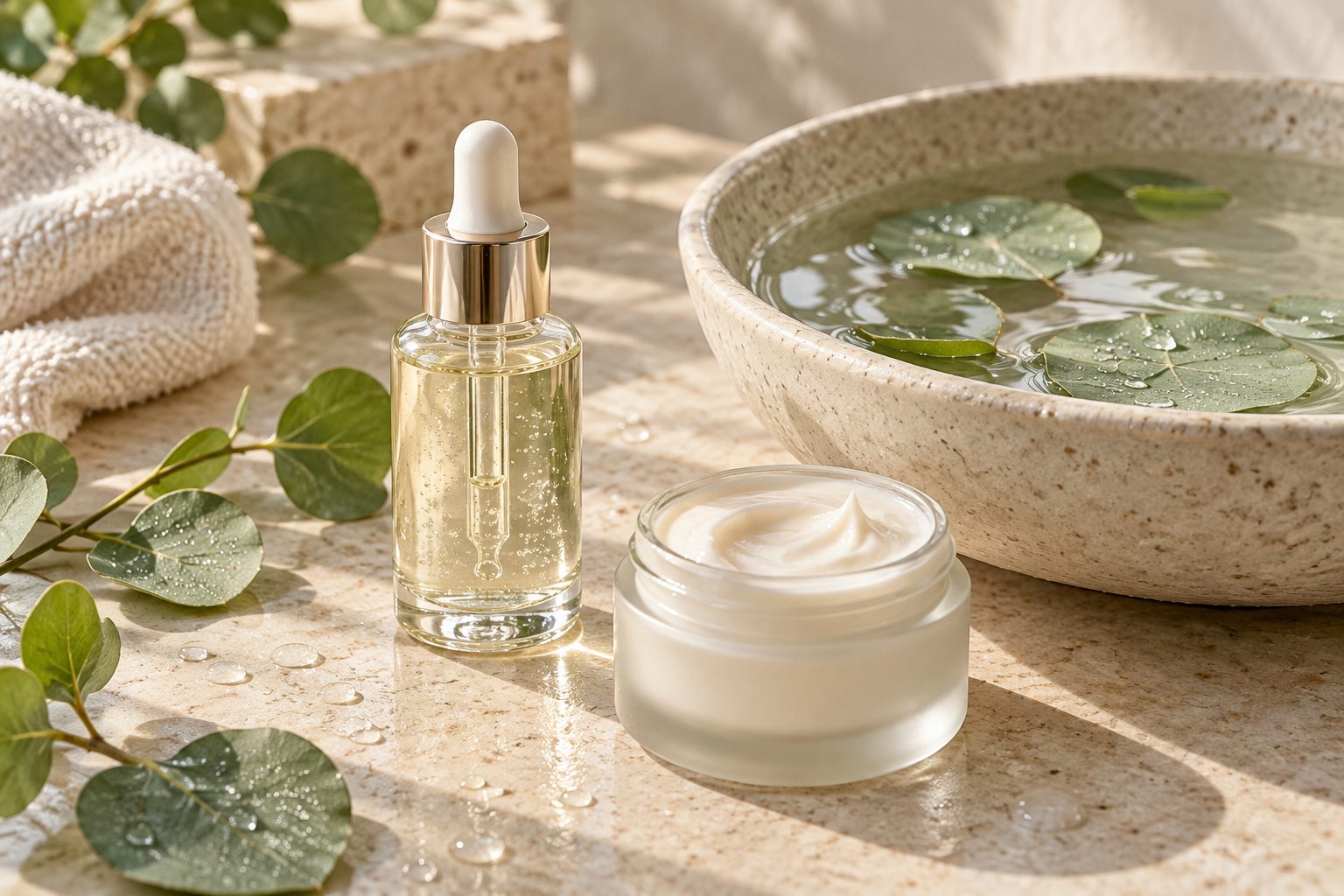
Hydrating products rely on humectants — ingredients such as glycerin and hyaluronic acid that attract water. Moisturizing products rely on emollients (ingredients that smooth, like squalane and plant oils) and occlusives (ingredients that seal, like shea butter or petrolatum). Many moisturizers combine all three, which is why a well-chosen cream can be enough for most people.
Putting it together
If your skin is dehydrated, add a humectant step on damp skin and follow it with a moisturizer so the water stays put. If your skin is dry, prioritize richer creams with emollients and occlusives. If it is both, do both — hydrate first, then seal.
Not sure which you are dealing with? Describe what your skin feels like and a consultant will reach out to help.